

A soundcheck for the new fill valve
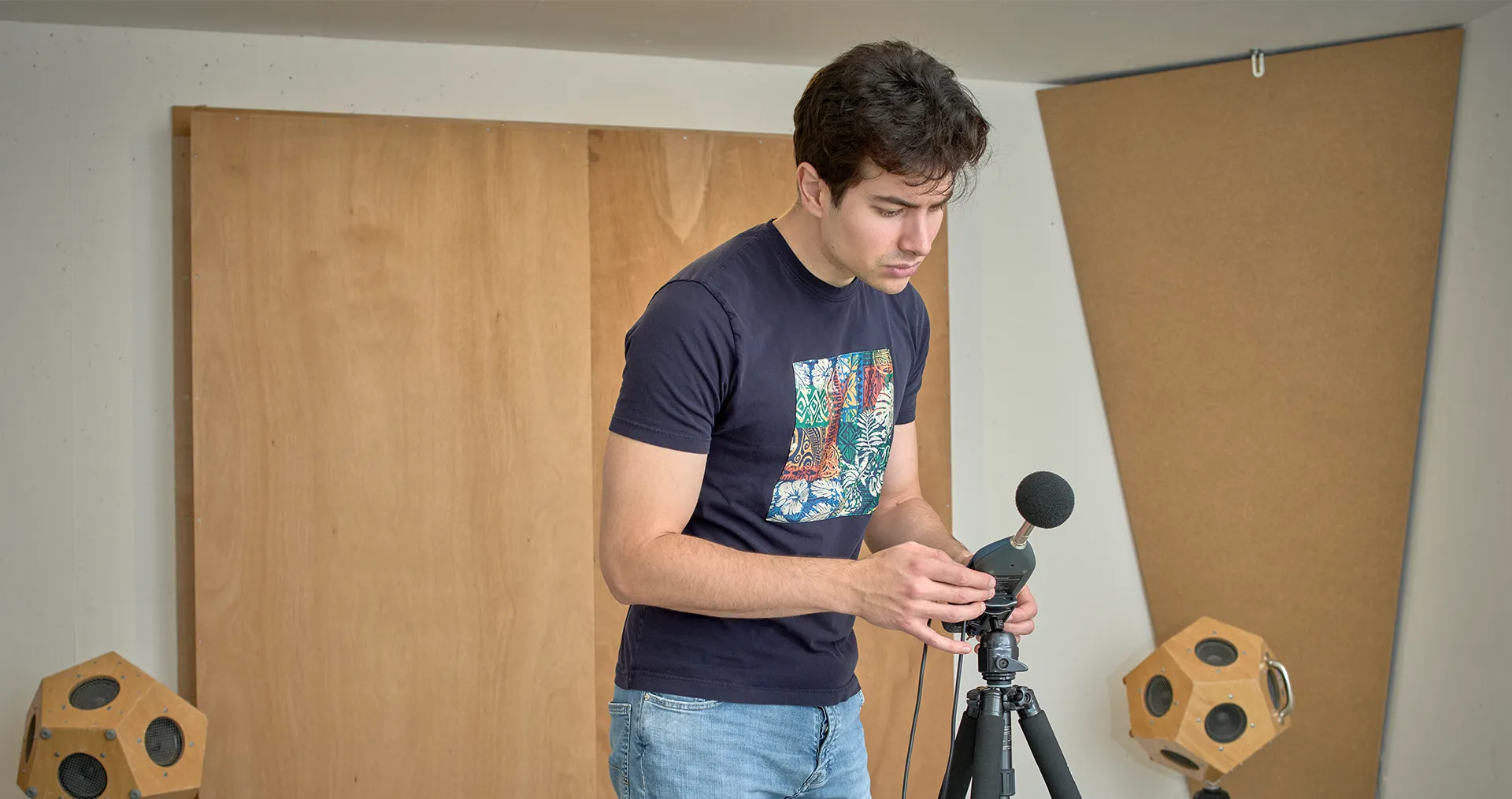
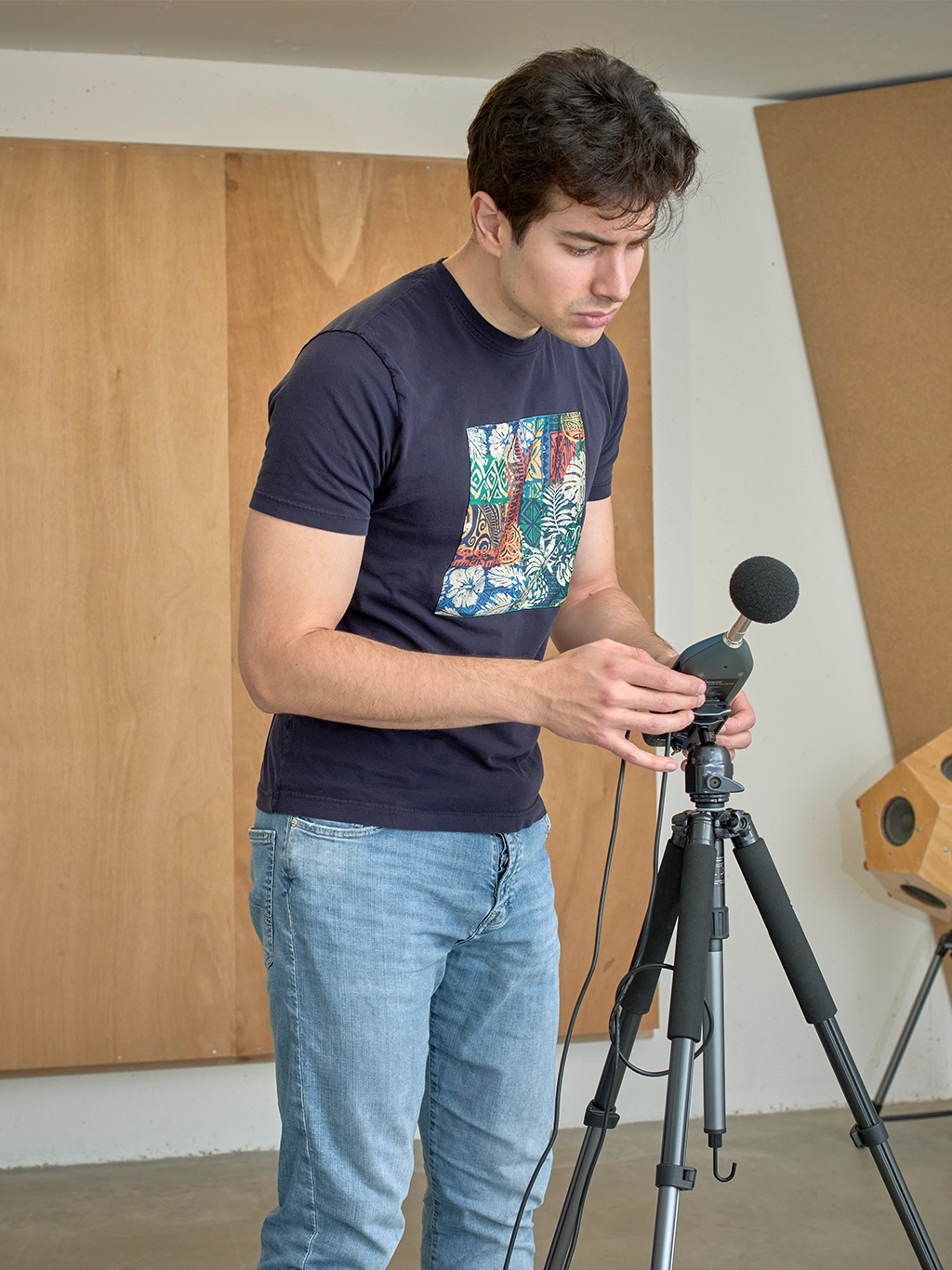
The Type 383 fill valve is one of the quietest valves on the market. This is no accident: at Geberit, comprehensive acoustic expertise is central to the development of sound-optimised products.
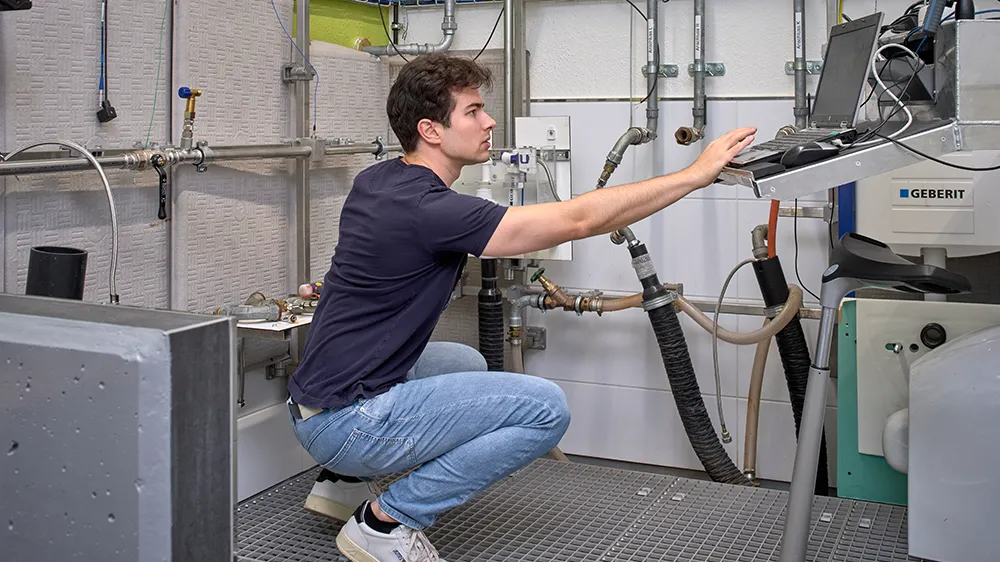
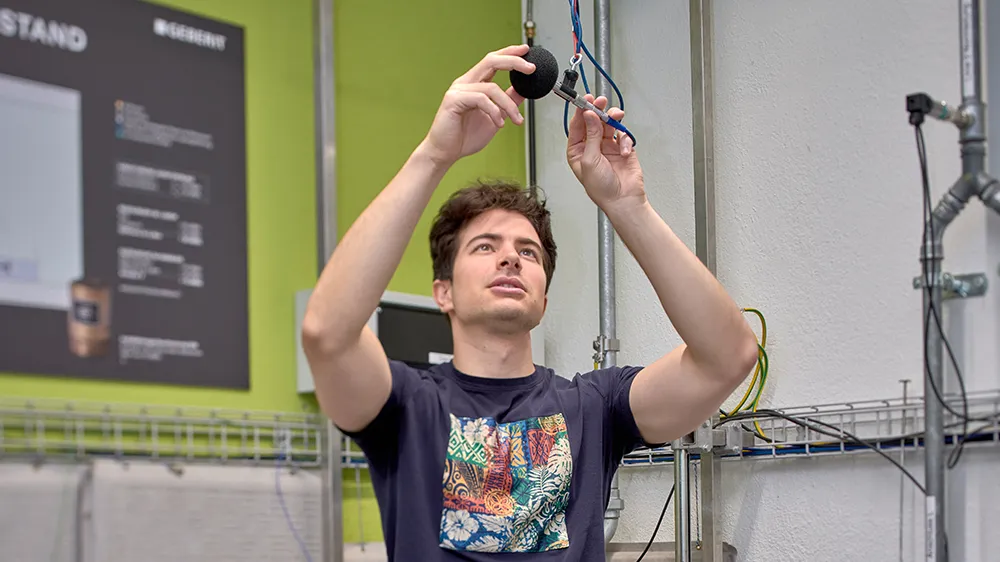
Acoustic engineer Pietro Allegri presses the record button. On the screen, a zig-zag line depicts the sound of the water. This is a typical acoustic test at Geberit headquarters in Rapperswil-Jona (CH). Many of these tests are strictly standardised – including the installation test facility where Pietro Allegri measures the noise of the new Geberit Type 383 fill valve.

Measurement in the adjoining room
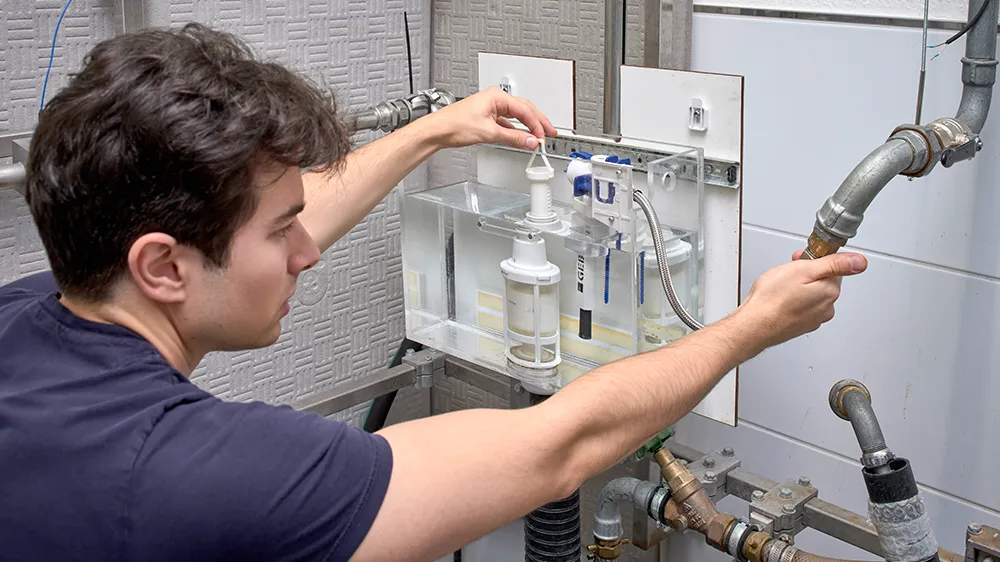
The installation test facility consists of two neighbouring rooms, the installation room with test cistern and Type 383 fill valve, and the measuring room where the microphones are set up. “In a real building, this would be the bathroom and the bedroom next door,” explains Pietro Allegri. If the toilet flush is now actuated, the fill valve opens and the water rushes through the pipe in the wall. “This noise is exactly what we measure.”
Like its predecessor, the new fill valve is clearly among the best in class. The sound transmission in the neighbouring room is even reduced by a few decibels. The difference is also noticeable in the installation room. “The perceptible volume has been almost cut in half,” says the acoustics specialist. You can now hardly hear the cistern filling in the bathroom.