

The house that stores CO2
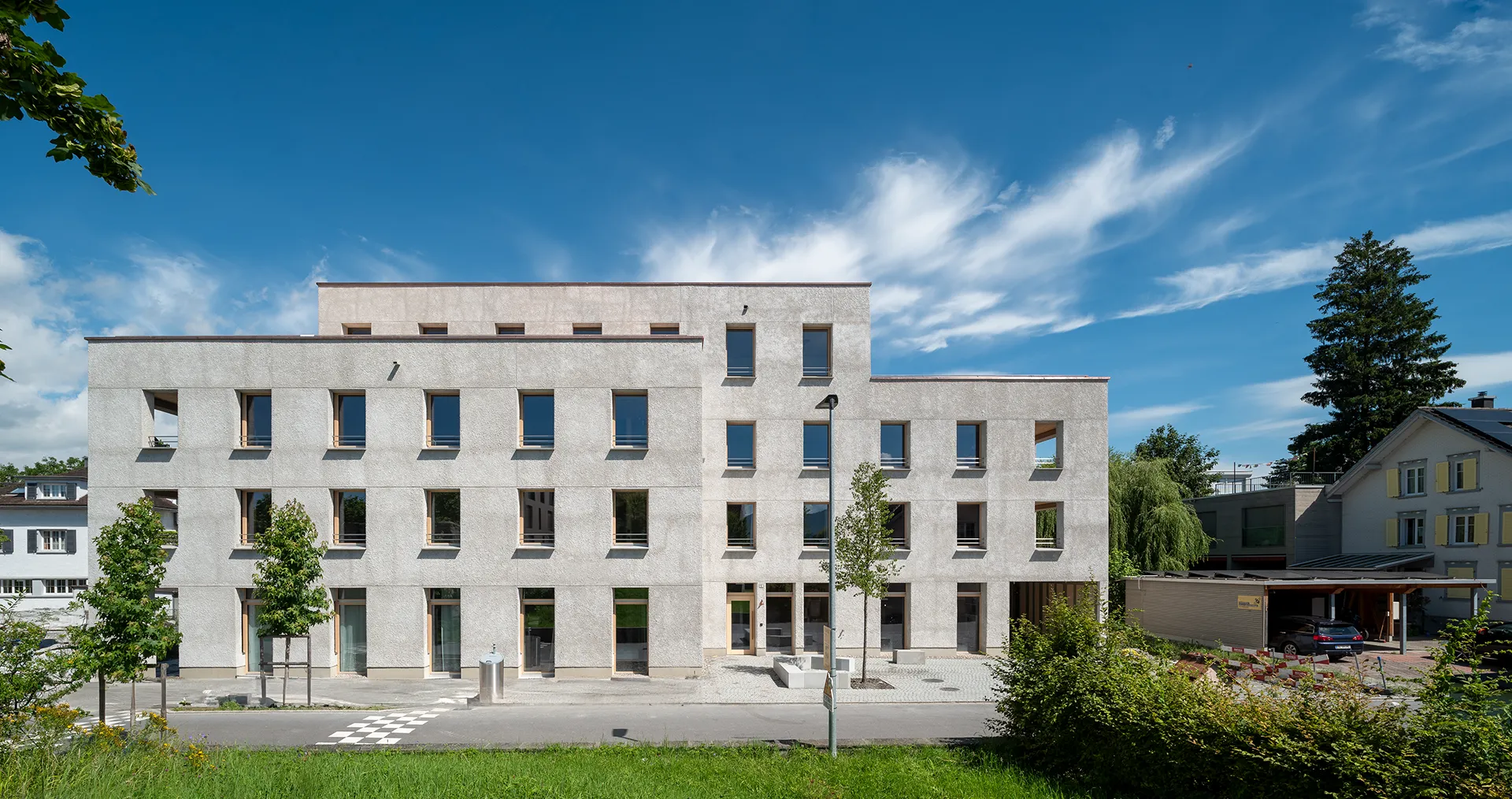
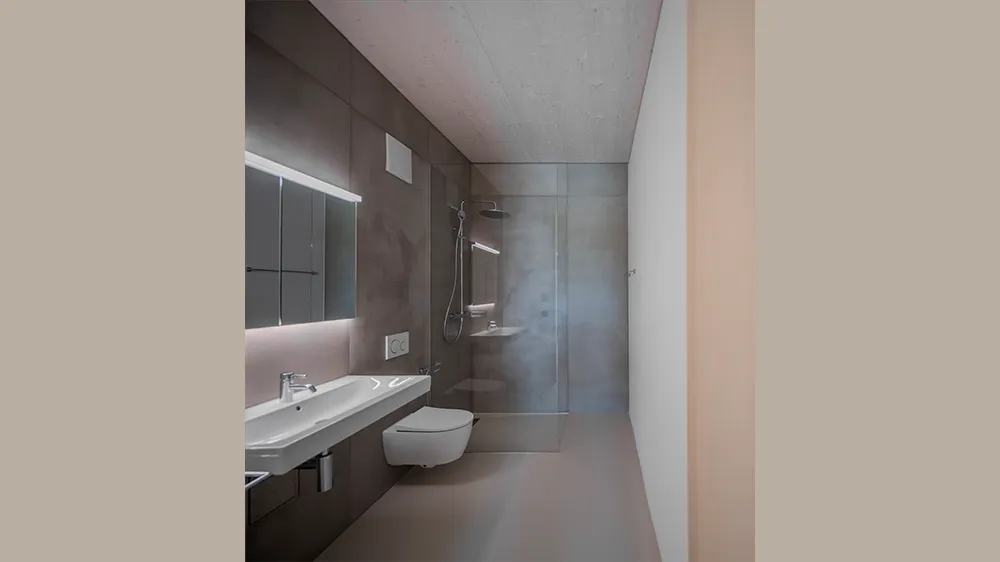
With a specially developed construction system, Swiss entrepreneur Andy Keel not only wants to achieve climate-neutral building, but also wants to utilise buildings as CO2 sinks. The bathrooms in Europe’s largest hemp house feature Geberit products.
Openly Valley, Widnau (CH)
- Building owner: Openly AG, Widnau
- Architecture: Baumschlager Eberle St. Gallen AG, Openly AG, Widnau
- Completion date: July 2024
GEBERIT KNOW-HOW
- iCon toilet and washbasin
- Sigma20 actuator plate
- Silent-db20 drainage system
- Geberit FlowFit and PushFit supply systems
- SilentPanel sound insulation element
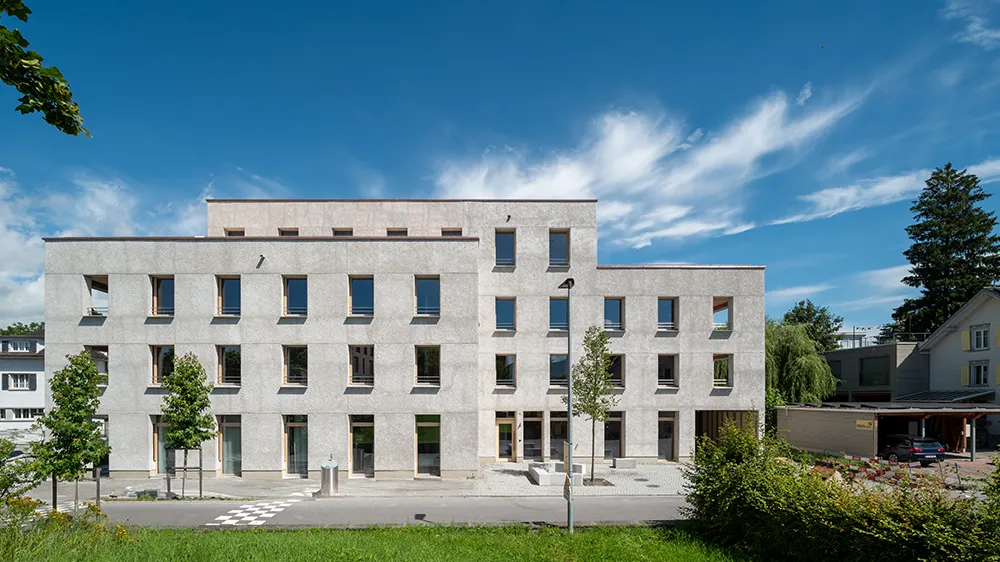
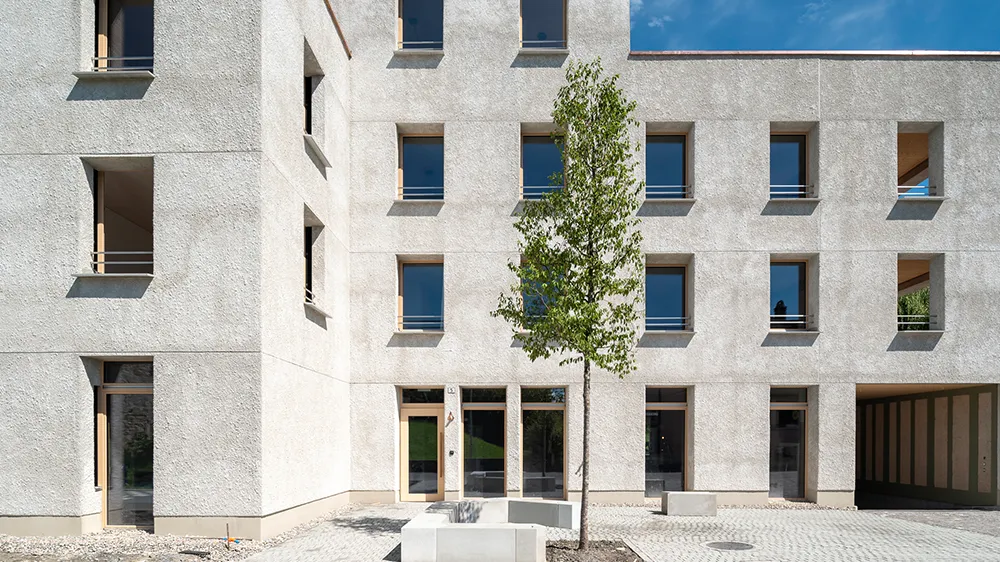
Swiss entrepreneur Andy Keel has an ambitious goal – to set new standards in the building construction industry. His first completed project is Openly Valley, located in Widnau (CH). The multifamily house was built in a completely carbon-neutral way thanks to biogenic carbon capturing. This involves primarily using materials that absorb large amounts of CO2 during growth, such as certain types of wood. The building is based on a modular timber system that is durable and can be adapted flexibly. The components are plugged or screwed together so that they can be easily reused.
100
kg/m3
of CO2 is stored by “Cancret” hempcrete.
Largest hemp house in Europe
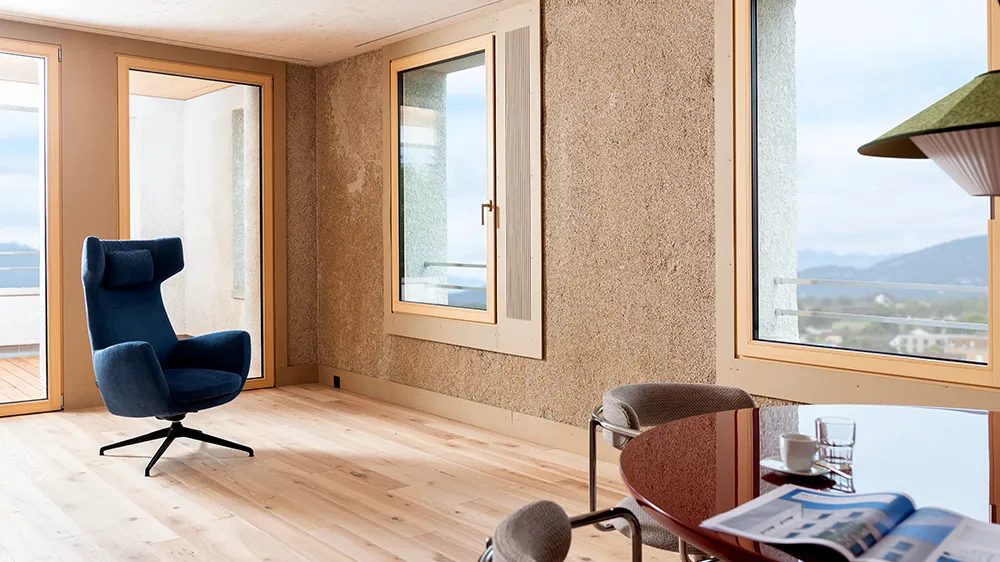
As a natural and rapidly growing raw material, hemp is used among other things as insulation – in the form of a specially developed hemp concrete called Cancret. This can store a net 100 kilograms of CO2 per cubic metre. The building is the largest hemp house in Europe. Geberit supplies ceramic appliances with independent environmental product declarations (EPD) that help to calculate the building’s CO2 balance, among other aspects.