

40% fewer rejects
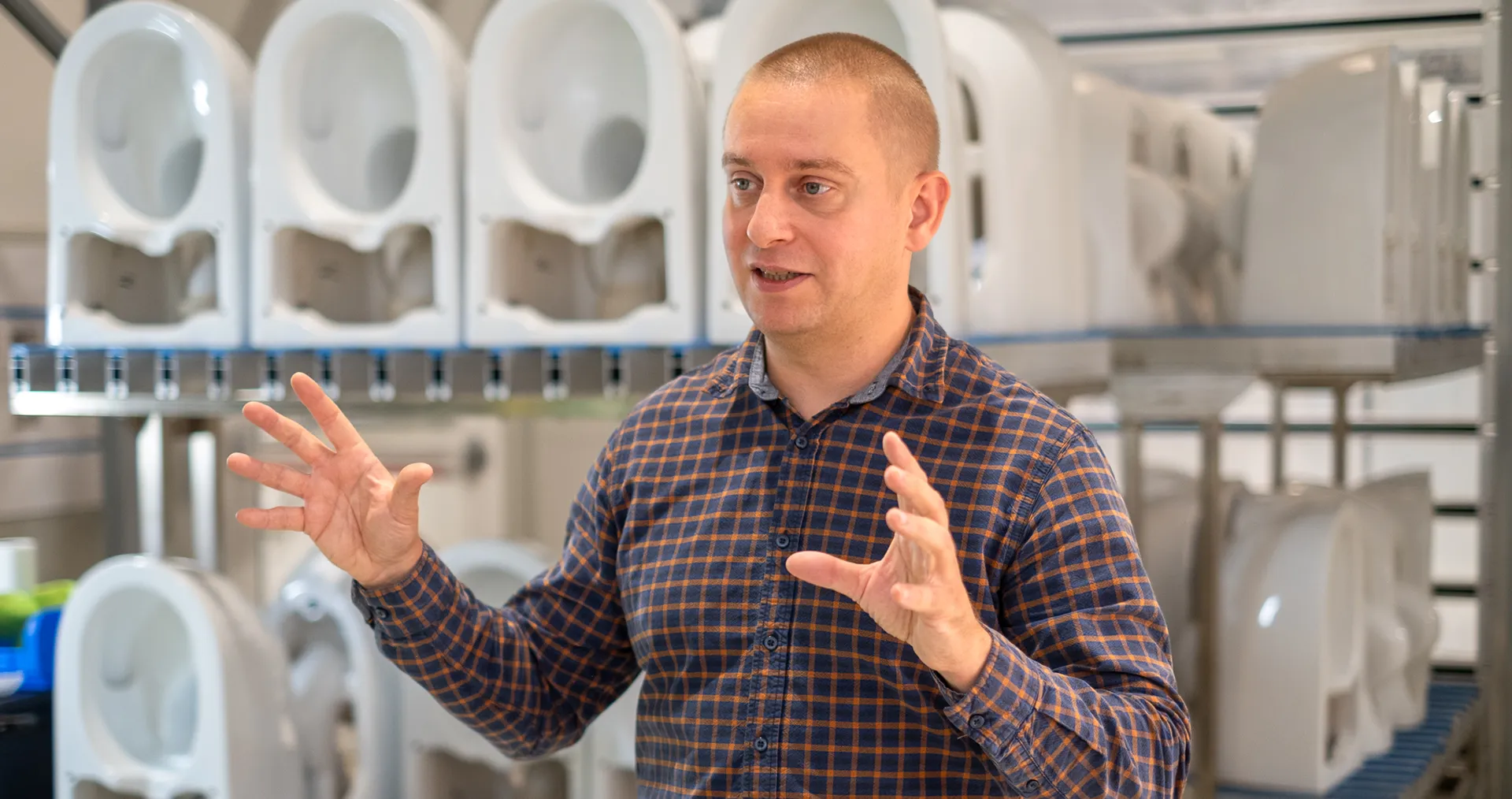
Turning experience into science: Geberit is making ceramic production predictable and efficient. The result is better quality combined with significantly reduced resource consumption.
Ceramic production used to resemble an act of alchemy. Clay, quartz, feldspar and water are mixed to form the slip – a sensitive mixture whose success is dependent on the weather, air circulation and the quality of the water. A lot is based on experience and gut feeling. “Experienced ceramic specialists were thought of as magicians,” says Łukasz Olejnik, Head of Production at the ceramics plant in Koło. “They could tell at a glance whether the slip was suitable – this was pure intuition.”
Data instead of intuition
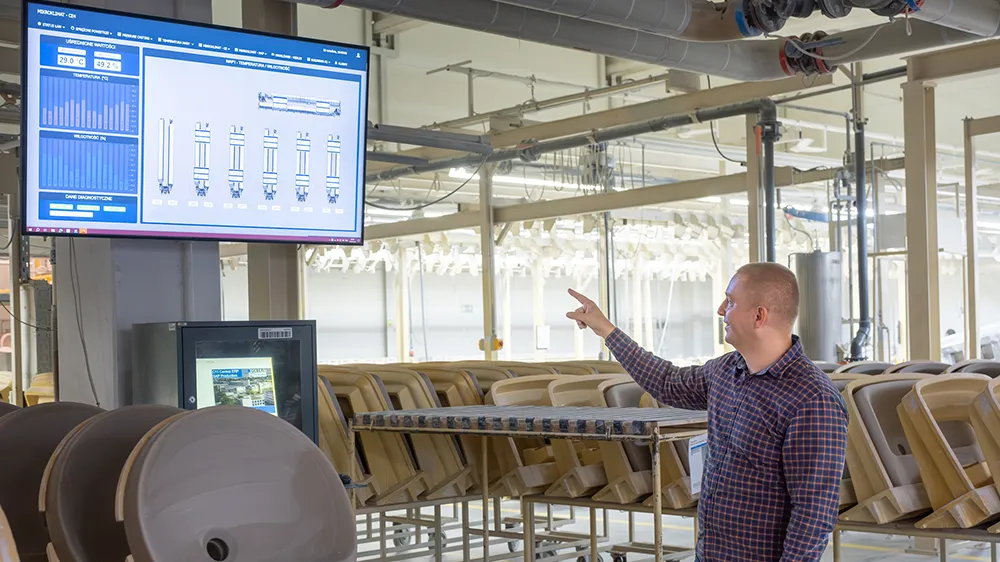
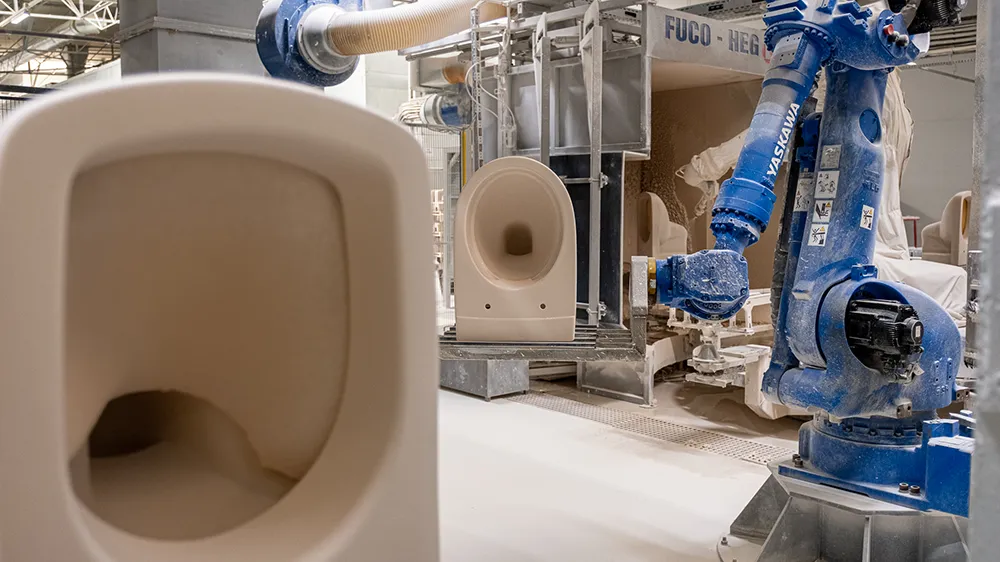
Today, Geberit is writing a new chapter in ceramic production. Since recently, the plant in Koło measures and analyses all process parameters – from temperature and humidity to mixing ratios and dwell times. Production now follows a clear logic, based on data and understanding instead of chance. The results speak for themselves: rejects are down 40 percent, but energy and water consumption plus CO2 emissions are also falling. “Better quality with lower resource consumption,” says Łukasz Olejnik. “That’s true sustainability.”
Kicking the habit
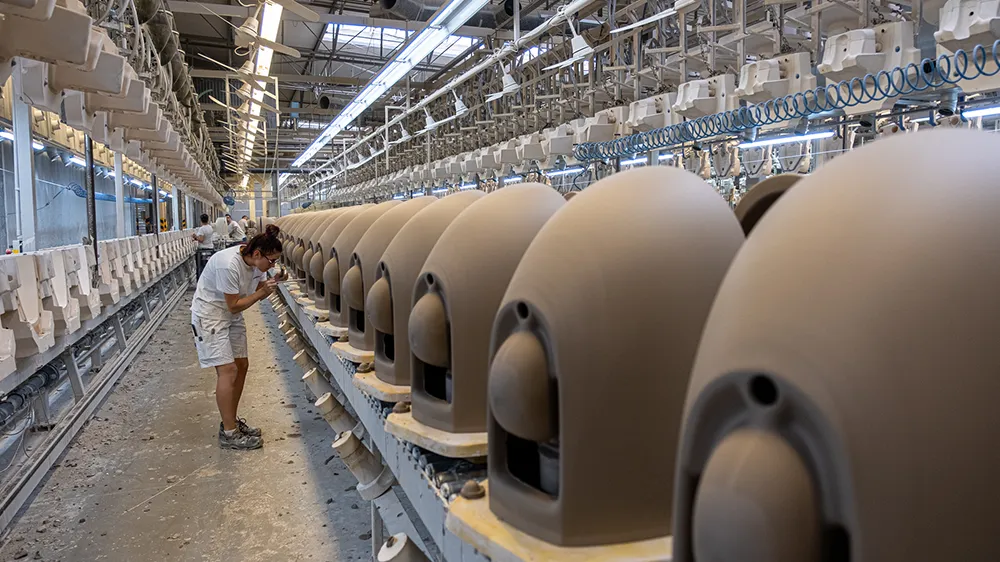
The real change is taking place in the minds of those involved. Employees learn how to recognise interactions and take on responsibility. Step by step, a new understanding is created of how technology, knowledge and experience intertwine. A traditional craft is then transformed into a modern process – one that is precise, efficient and transparent. Łukasz Olejnik smiles: “We didn’t destroy the magic. We just explained it.”