

Material topics
The identified material impacts, risks and opportunities were assigned to the following topic standards according to ESRS:
E1 Climate change and energy
E3 Water
S1 Own workforce
S2 Employees in the value chain
G1 Corporate culture and antitrust legislation (company-specific)
Material topics
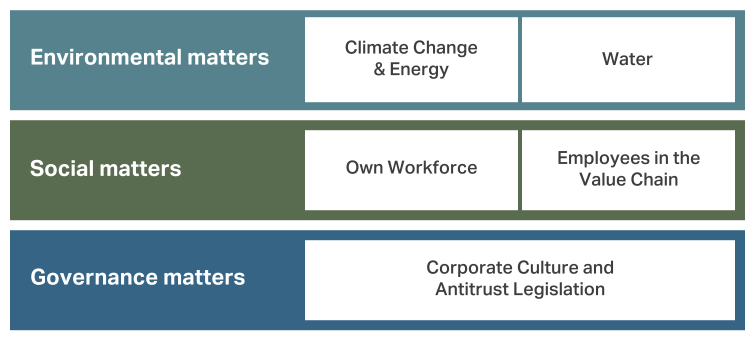
The materiality assessment according to ESRS and its results form the basis for the sustainability strategy and the Group-wide ESG reporting.
Non-material topics
As part of the double materiality assessment, all topics named in the ESRS were checked systematically for their potential materiality. Topics without significant impacts, risks or opportunities were excluded from the assessment process at an early stage.
For the topic standards detailed below, no materiality was detected within the meaning of ESRS 1. As a result, no detailed reporting is made here in the 2025 reporting year:
ESRS E2 – Pollution: Emissions in air and water from production are controlled and minor. Hazardous substances are managed systematically Group-wide in line with legal requirements and internal standards. There are clear standards within the supply chain. No relevant environmental pollution occurs in the product life cycle. No sub-topic reached the threshold for materiality.
ESRS E4 – Biodiversity and Ecosystems: Geberit has no direct influence on biodiversity hotspots. A spatial analysis of all 26 plants did not reveal any locations in nature-sensitive areas. Exposure was determined according to a screening with the WWF Biodiversity Risk Filter (BRF) and a site comparison with Key Biodiversity Area (KBA) and Natura 2000 areas. The preliminary clarifications suggest that the Geberit sites do not pose an increased risk for potential impacts on nearby nature-sensitive areas. No relevant dependencies on ecosystems were determined.
ESRS E5 – Resource Use and Circular Economy: Resource use is documented comprehensively as part of internal environmental reporting. While there are impacts in production, these are not considered as being material by either stakeholders or management. Aspects related to the circular economy of products are taken into account due to their durability, etc.
ESRS S3 – Affected Communities: Geberit primarily has facilities in regions with high environmental and social standards; material negative impacts on local communities were not determined. Contact to the local population is maintained proactively.
ESRS S4 – Consumers and End-users: Risks arising from product safety, health and information obligations have not reached the threshold for materiality. Products are durable, safe and regulated; information-related aspects (e. g. data protection) are systematically addressed, but turned out to be non-material on the whole.
These topics will continue to be observed by Geberit, taken into account in environmental management systems and local relevance analyses and checked again as part of future materiality assessments.