

Sustainability strategy
The sustainability strategy is an integral part of Geberit’s corporate strategy. It defines the ESG-related operational focal points of the company and controls their implementation via clear targets, indicators and responsibilities. It is based on the corporate strategy, risk management and the materiality assessment, which acts as an ESG-focused part of the risk analysis. Moreover, the strategy takes into account external framework conditions – such as national and international regulations, global sustainability standards and the expectations of business partners and investors.
Sustainability strategy: influencing pillars
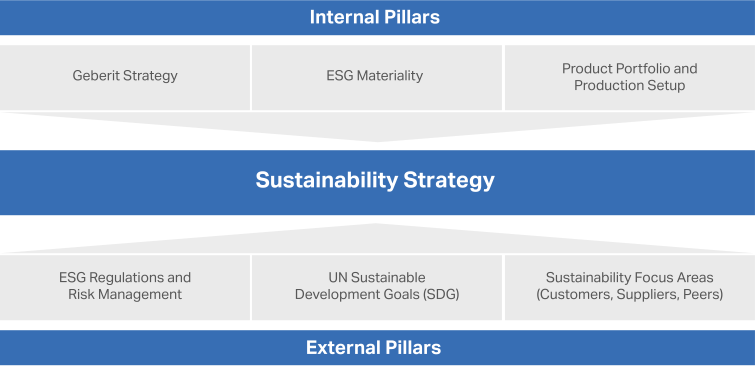
Sustainability strategy
With the sustainability strategy, Geberit aligns its activities consistently to the most important levers for sustainable value creation. The strategy bundles together current and future projects, initiatives and activities into four clearly defined focus areas in order to control their impact in a targeted way.
The individual focus areas are explained in detail in the respective chapters on material topics; the progress made in the reporting year is disclosed according to the defined key figures. For information on other non-material topics, such as “Waste”, see Business Report > Business and financial review > Financial Year 2025 > Environment.
Contribution to sustainable development
The material topics and the sustainability strategy of the Geberit Group make a direct contribution to the Sustainable Development Goals (SDGs) listed in the United Nations’ 2030 Agenda. This focuses on four of the development goals that are particularly relevant to the business model:
SDG 4: Quality Education
SDG 6: Clean Water and Sanitation
SDG 11: Sustainable Cities and Communities
SDG 13: Climate Action

The annual progress can be seen via the SDG Index SDG Reporting.