

AI combs through mountains of data
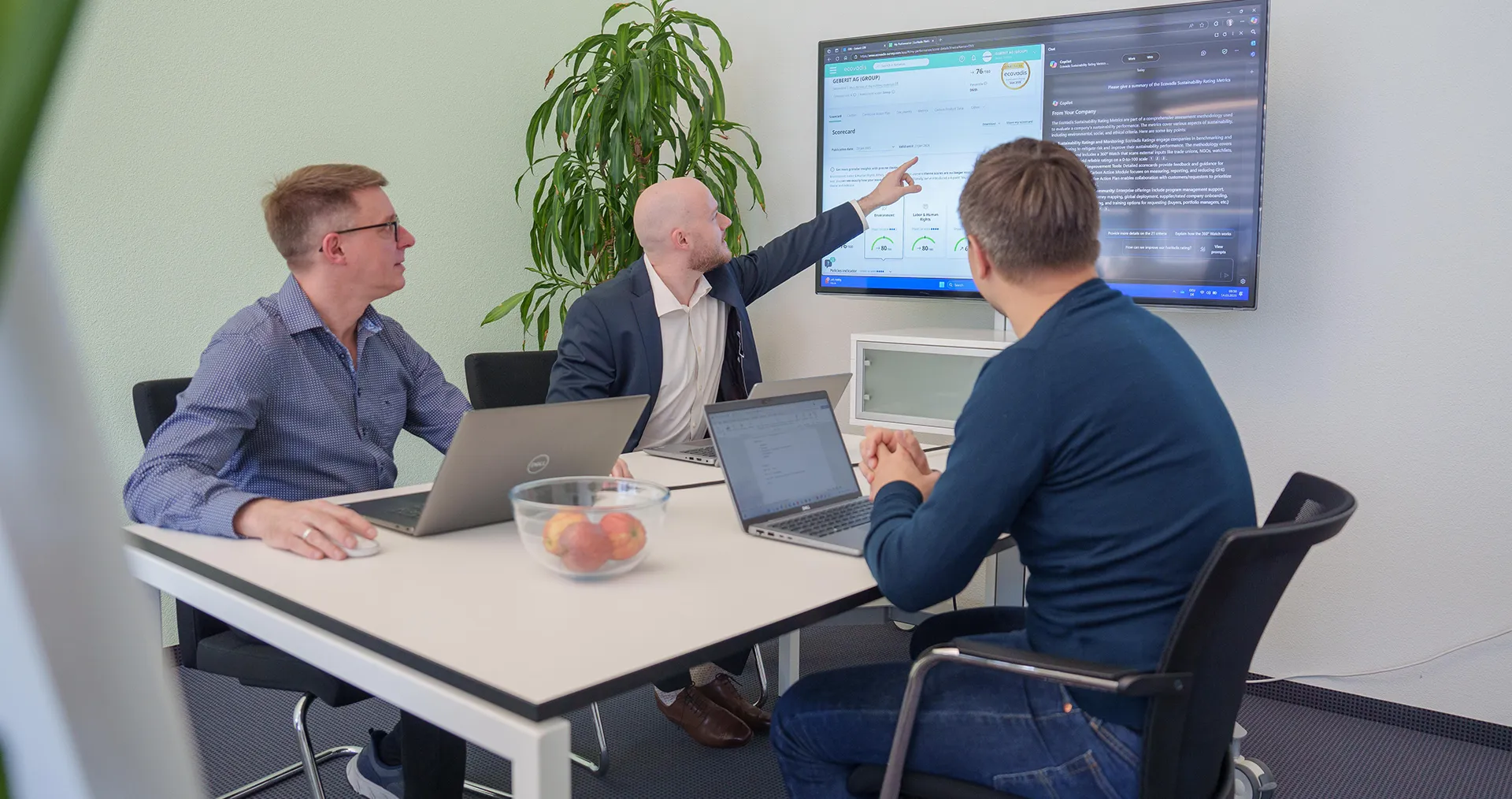
Together with the in-house AI Competence Centre at Geberit, interdisciplinary Geberit teams develop AI agents that automate workflows and make everyday work more efficient.
“I can analyse large volumes of data quickly and recognise patterns,” explains the Microsoft Copilot – a digital assistant based on artificial intelligence (AI) – when asked about the strengths of this technology. But how can this potential be utilised? In 2024, Geberit establishes an in-house AI Competence Centre. The team of experts organises hackathons where employees rapidly develop real applications – such as AI agents that carry out tasks independently.
Complete knowledge available
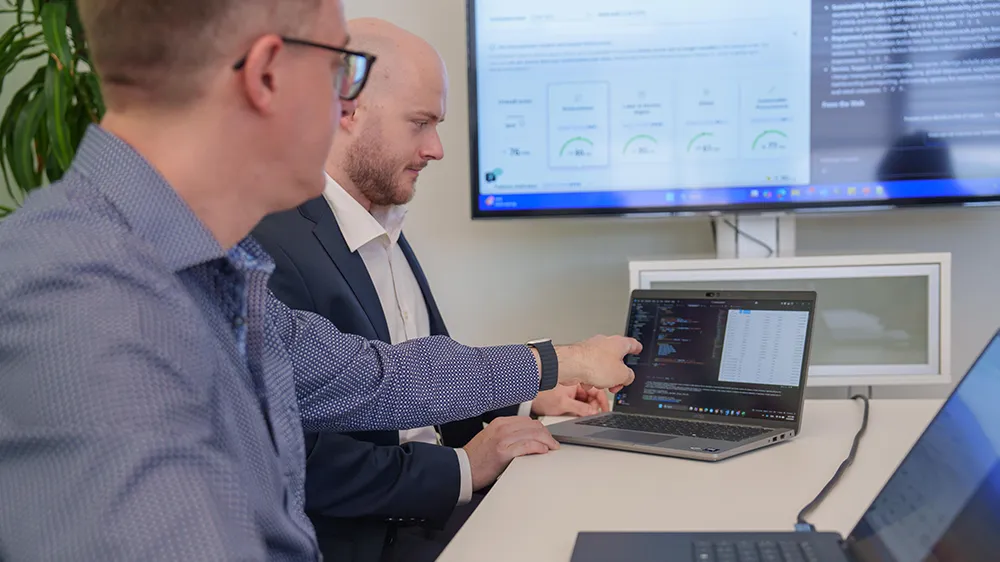
One of the first projects is the partial automation of responses to external enquiries about sustainability. The reporting obligations in this field are constantly increasing, with rating platforms requiring up to 500 precise answers on the sustainability performance of a company, based on numerous documents. “An AI agent taps into our complete knowledge of environmental, social and economic sustainability and can help to answer the many questions precisely and in a verifiable way,” says Iwona Swietlik, who is responsible for communication and reporting on sustainability.
More time for what’s important
For François Rüf, Head of the AI Competence Centre, the hackathons are good examples of how artificial intelligence can partially automate repetitive tasks: “Our experts can then concentrate on more important tasks instead of spending time looking for information.”